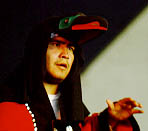
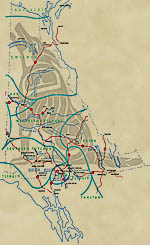
Come and experience the gift of a lifetime! The First Nations of the Yukon have developed a wide range of tourism businesses and attractions that will appeal to the visitors to this land.
The businesses and attractions range from wilderness adventure to main stream tourism businesses. There are several unique, culturally oriented businesses. These types of operations provide an experience next to none. These businesses give the visitor an opportunity to meet the Yukon First Nations. They are the hosts, and can provide the visitor with a unique cultural experience.
Additional tourism information about the Yukon can be found on the Travel Yukon Website.
The First Nations people
are very friendly and easily approached. They are also very knowledgeable regarding the
Yukon in all aspects.
Visitors are advised that if they are travelling throughout the Yukon
and happen to come across camps that are being utilized by the First Nations for
traditional pursuits, they should respect that this is not always a tourist attraction and
that this is a way of life. They may ask if it is okay to watch, visit or participate.
Visitors are reminded that First Nation burial grounds are not to be
disturbed.
Many
Yukon First Nation's peoples are gifted artists and artisans. The styles vary from
traditional practices and materials, to using certain modern approaches with a First
Nation flair. The range of expression is wide - from all aspects of the visual arts to
music, dance, song, stories, poems and plays.
The traditional art a visitor can find throughout the territory
include; beadwork, moccasins, baby belts, homemade jewelry, and mukluks. Other forms of
art include; carvings, masks, and paintings. Many of these items can be found in a variety
of galleries and shops. When you are in the Yukon communities, visitors can make inquiries
as to whom the local artists are and how to get in touch with them, as not all artists
deal with shops or galleries.
The Yukon International Story Telling
Festival, Commissioner's Potlatch, Native Folklore, Moosehide Gathering, Yukon Indian Days
and stick gambling competitions are exciting
events that take place throughout the year and are hosted by the Yukon First Nations
people. At these events visitors can meet the local people and become more familiar with
regards to the First Nation culture.
There is growing interest in wilderness tourism products as well as cultural products. In the Yukon, visitors can find First Nations businesses that cater to this market. Some of the businesses have successfully combined the wilderness/adventure sector with value added cultural components.
The cultural components can provide visitors with a totally different
perspective. The participants in these businesses go away with a better understanding/knowledge of the Yukon First Nation culture and traditional way of life.
These businesses are located throughout the Yukon, some are fairly new and others have been established for a long time. Some of the various businesses include
activities such as, river travel, hiking, cultural camps, interpretation tours, and pre-European contact tours. Some of the various interpretation subjects include,
traditional medicine, flora and fauna, fish and wildlife management (uses, and preservation), history, survival, etc.
There are several museums and interpretive centres that have a fairly large display of, or strictly, First Nation
artifacts and historical components.
(moose hide skin house)
First Nation oriented attractions by community:
Carmacks: Taga cho Hudan Interpretive Centre
Whitehorse: McBride Museum Beringia Centre
Pelly: Selkirk First Nation Interpretive Centre
Dawson City: Tr'ondek Hwech'in Cultural Interpretive Centre
Teslin: George Johnston Museum
Burwash: Kluane Museum of Natural History
There are First Nation's people, as well as First Nation's administration offices, in all of the Yukon communities. For more specific information
regarding local activities, events and attractions within the various communities, the local First Nations Band Offices may provide assistance or the local Visitor Reception Centres.
The objective of
the potlatch is to commemorate special events. The word potlatch means "to give" and "a big party" and served a very important function in Kwa'day times. Kwa'day times refers to when today's elders were children.
The potlatch ceremonial event, in Kwa'day times, was not primarily restricted to the death of a relative. The potlatch has a gathering function, and
"was given in honour of living people, especially mothers" (Yukon Historical and Museums Association, 1986) and special rites of passage, such as births, puberty and marriage.
Potlatches in the Yukon began a long time ago and helped codify rules
of behavior required for a culture to survive. The potlatch provides a way to validate one's existence and status within a community.
People would plan these gatherings well in advance and would travel great distances to attend. Usually the potlatch was hosted and paid for by the crow clan or the wolf clan. People would save items, sometimes for years, to be given away as gifts at a potlatch. (Excerpts from Potlatch: The Southem Tuchone Way, Easterson 1992)
Today most potlatches are given when a person dies. Some of the First
Nations are starting to revive their culture. They are trying to bring back this very important function.
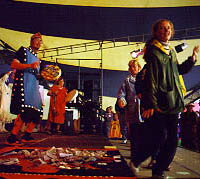
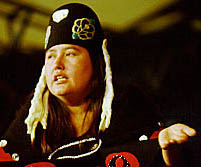
One way the First Nations revived the Potlatch tradition was by having the Commissioner's Potlatch, which was first held in Whitehorse in June of 1998. There were
representatives from all the Yukon First Nations, as well as Northem British Columbia, and the Northwest Territories. This event was well attended by Yukoners and visitors alike. This has since become an annual event.
This is an annual
festival held in Whitehorse, Yukon in the month of June. Spinners of tales come from around the world to share their stories, songs and dances. This is a very popular event, which includes a number of First Nation entertainers. There was an elder from the Tagish First Nation who originally inspired the idea for this event. Her name was Angela Sidney. The First Nations have, throughout history, depended on storytelling and legends to pass on their culture and history to future generations.
The aboriginal people and elders from the Han culture in the Dawson City area are the hosts of this event which, happens every second year. The next gathering will be held in the year 2006. This event is open to all nations of the world. The inclusion of all nations of the world is the most important
part of this gathering. Participants will be able to share their knowledge past, present and their hopes for the future.




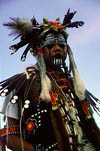


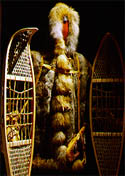
 VIEW THE FIRST NATION ART GALERY
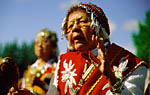 T
T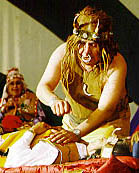 The cultural components can provide visitors with a totally different
perspective. The participants in these businesses go away with a better understanding/knowledge of the Yukon First Nation culture and traditional way of life.
The cultural components can provide visitors with a totally different
perspective. The participants in these businesses go away with a better understanding/knowledge of the Yukon First Nation culture and traditional way of life.
 Potlatches in the Yukon began a long time ago and helped codify rules
of behavior required for a culture to survive. The potlatch provides a way to validate one's existence and status within a community.
Potlatches in the Yukon began a long time ago and helped codify rules
of behavior required for a culture to survive. The potlatch provides a way to validate one's existence and status within a community.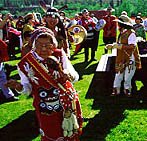 Today most potlatches are given when a person dies. Some of the First
Nations are starting to revive their culture. They are trying to bring back this very important function.
Today most potlatches are given when a person dies. Some of the First
Nations are starting to revive their culture. They are trying to bring back this very important function.